

一 | (ECNS) -- The first phase of the middle route of China's South-to-North Water Diversion Project had transferred more than 80 billion cubic meters of water to northern China as of Friday, directly benefiting nearly 118 million people, according to the Changjiang Water Resources Commission. The water comes mainly from Danjiangkou Reservoir, where managers balance reservoir inflows, local demand in the Hanjiang River basin, northbound supplies, and downstream ecological needs. This summer, after forecasts pointed to below-normal rainfall, authorities adjusted reservoir operations to retain about 1.5 billion cubic meters more water as a buffer against possible drought. Technology is playing a growing role in monitoring water quality. An AI-powered floating platform works alongside satellites, drones, and ground monitoring stations, feeding data into a digital twin of Danjiangkou Reservoir that tracks water quality, simulates flood scenarios, and supports emergency planning. At Danjiangkou Reservoir, the core water source for the middle route, an autonomous vessel collects samples from different depths to monitor algae. Using AI-powered microscopy, the floating station identifies microorganisms quickly and tracks algal activity, giving early warning of blooms. The vessel is part of an integrated satellite, aerial, surface, and structural monitoring network that combines remote sensing, drones, ground-based stations, and sensors embedded in the dam. By fusing multi-source data in real time, the system has shifted water monitoring "from isolated points to full-area coverage," said Cui Dongdong, deputy director of the technology development department at a company under the Yangtze River Water Resources Commission of the Ministry of Water Resources. With the digital platform, a regulation plan that once took days to produce can now be generated in seconds. The platform runs more than 15 professional models covering flood routing, pollutant dispersion, and dam structure simulation. The 1,432-kilometer middle route canal carries water across the Yangtze, Huai, Yellow, and Hai river basins before it reaches households in the north. Water quality has also improved, and the nationally protected "crystal jellyfish," known as the "giant panda of the water," is now sighted frequently in the reservoir, an indicator of excellent conditions. (By Helen Mo, intern Yang Hongran) 
 。
。
一键部署OpenClaw
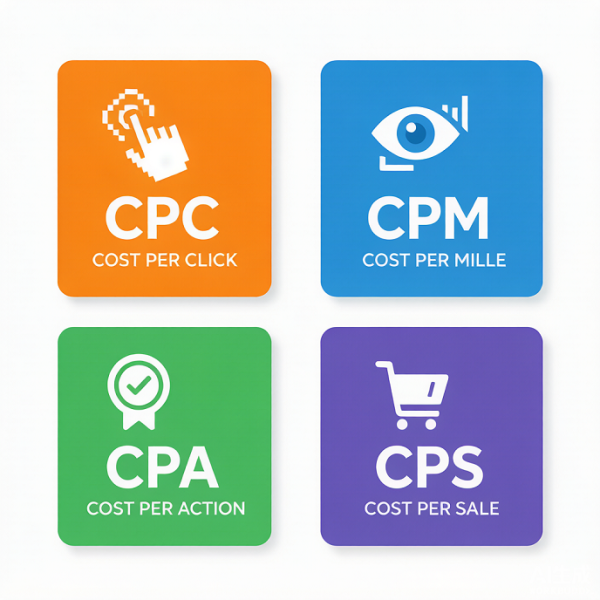
刚接触广告联盟的人,看到CPC、CPM、CPA、CPS这一串英文缩写容易犯晕。其实这四个东西就是广告联盟的四种计费方式,搞明白区别对你选联盟、选广告位都有帮助。

二 |
CPC就是按点击计费,全称Cost Per Click。用户看到广告不花钱,只有点击了广告才算一次有效行为。广告主按每次点击付费,网站主按每次点击拿钱。Google AdSense主要以CPC为主,百度联盟也有不少CPC广告。
举个例子:一个广告的CPC出价是2元,你的网站展示了1000次这个广告,有10个人点了,那你赚的就是10次乘2元等于20元。

三 | 展示次数不直接产生收益,点击才是关键。
CPC适合什么网站?内容类网站、资讯站、博客这种,用户在浏览内容时看到感兴趣的广告顺手点一下,转化路径短。单价从几分钱到几块钱不等,看行业和广告主出价。
CPM是按千次展示计费,全称Cost Per Mille。不管用户点不点,广告在你网站上展示1000次就收一次钱。这种模式对流量大的网站比较友好,因为哪怕点击率低,光靠展示量也能赚一笔。
举个例子:CPM出价10元,你网站一天有5000次广告展示,那当天的CPM收益就是5乘10等于50元。CPM广告的品牌曝光类居多,单价相对低,但胜在稳定。
CPM适合什么网站?流量大但点击率不高的网站,比如工具类、查询类网站。用户来了用完就走,不一定点广告,但展示量大,靠量也能赚。
CPA是按行动计费,全称Cost Per Action。用户不光要点广告,还得完成一个指定动作才算数,比如注册账号、填写表单、下载APP。

四 | 单价比CPC高不少,但转化率低得多。
举个例子:一个游戏广告的CPA出价是30元,用户点了广告进入注册页面,填完手机号注册成功,你拿30元。但如果用户只点了没注册,一分钱没有。

五 |
CPA适合什么网站?垂直类、有明确用户群体的网站。比如你做考研论坛,挂个在线教育机构的CPA广告,用户注册转化率会比较高。泛流量站做CPA效果通常不好。
CPS是按销售计费,全称Cost Per Sale。最彻底的一种,用户通过你的广告链接下单购买了商品,你才拿钱。佣金比例一般是商品价格的5%到50%,看品类。
举个例子:你在网站放了个淘宝联盟的CPS链接,用户通过你的链接买了一台3000元的手机,佣金比例3%,你赚90元。但如果用户点了链接没买,或者加了购物车但没付款,都没有收益。
CPS适合什么网站?导购类、测评类、推荐类网站。用户来你网站本来就是要做购买决策的,顺手通过你的链接下单很自然。

六 | 比如“什么值得买”这种导购站,CPS就是主要收入来源。
四种模式怎么选?不用纠结选哪个,大部分广告联盟会自动匹配。

七 | 你需要做的是了解自己网站的流量特点,流量大但点击率低就多争取CPM广告,内容垂直用户精准就多接CPA和CPS。实际操作中混搭效果最好,CPM保底加CPC增量加CPA/CPS冲高收益。
申请创业报道,分享创业好点子。点击此处,共同探讨创业新机遇!。
Current article:http://4vf06ty.chengjuecannaobianmouqueduoyu.shop/news/20260826_1248681.html
Published on:17:34:54
上一篇:EconoScope | Why China remains central to global chains of industries despite tariffs
下一篇:分享4点拼多多起店经验


